somewhere along the way, yesterday

Table of Contents

CREDITS

presented on 29 August 2026 at the Reeve Theatre, University of Calgary

Choreography: Alèn Martel
Dancers: Claire Morton, Maria Mercedes Estrada-Caro, Abby Fernandes
Lighting Designer: Matt Lévesque
Audio and Lighting Technician: Christine Lucko
TouchDesigner Programming: Alèn Martel
Music: Bibio, Low, and Tomasz Mreńca

Thank you to the University of Calgary’s School of Creative Performing Arts and W&M Dance Projects‘ Artist-in-Residence program for the support.

SYNOPSIS

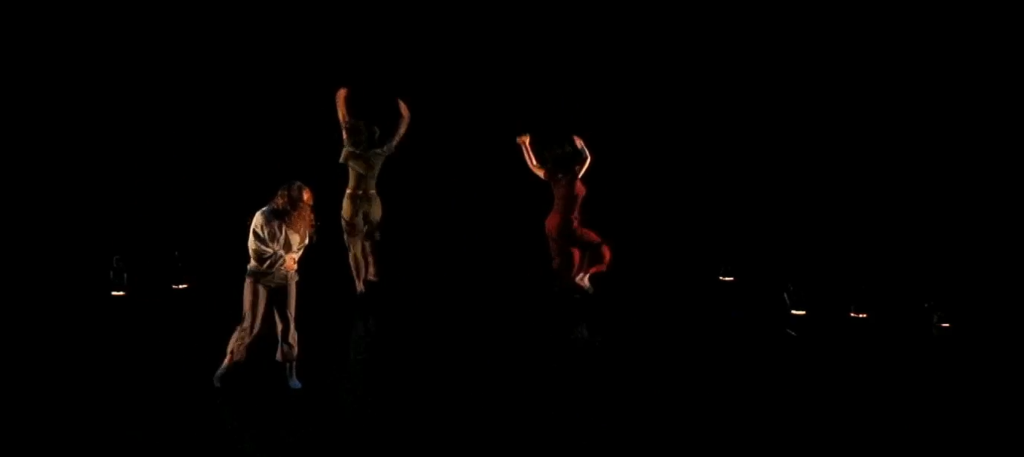
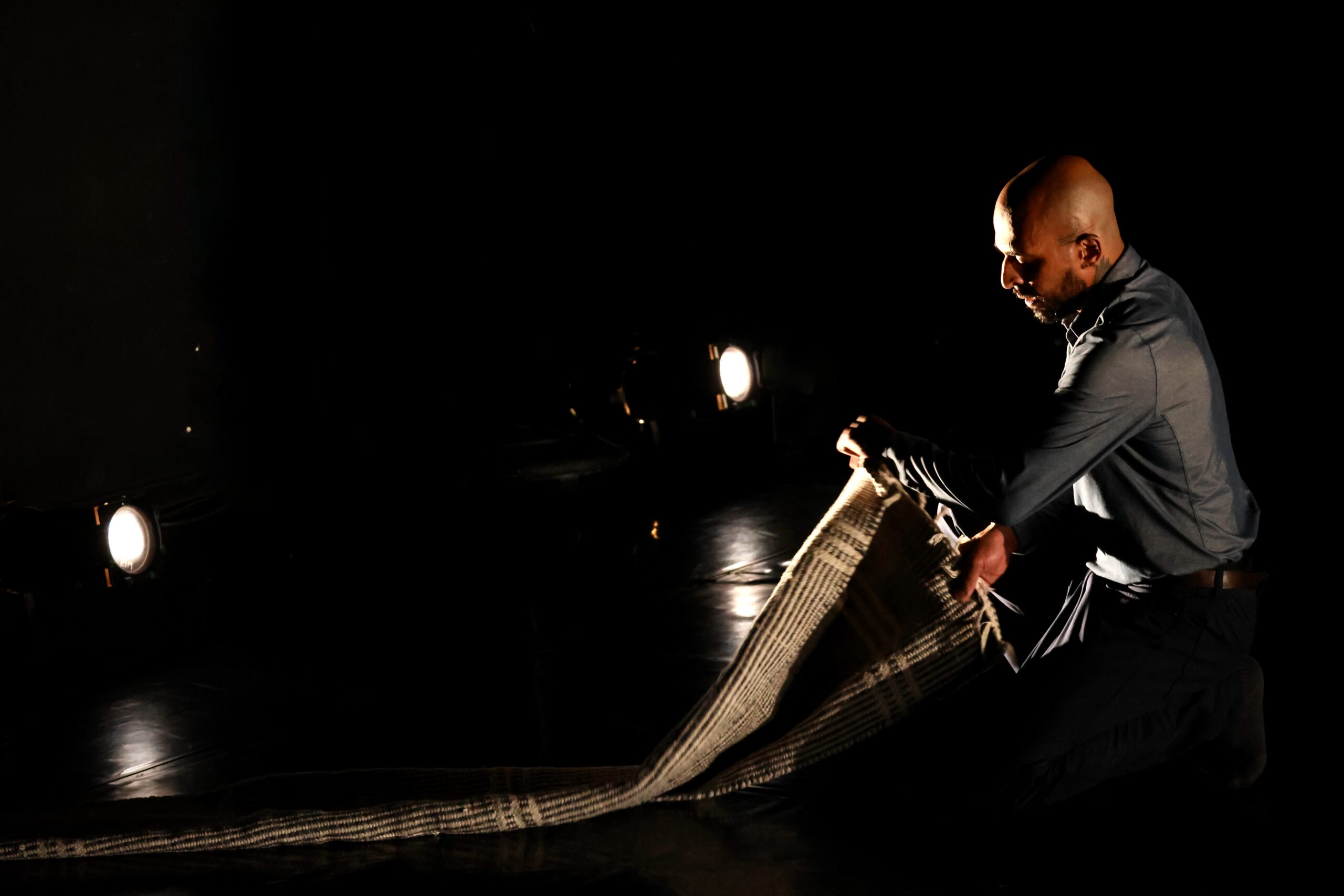
somewhere along the way, yesterday is an interactive dance and lighting work examining how a performance system can retain information, allowing movement from one moment to affect what becomes visible later. Using a ZED 2i camera, TouchDesigner, and ETC Eos, the system tracks dancers in three-dimensional space and translates aspects of their movement, including expansiveness, stage location, speed, stillness, occlusion, and other spatial behaviours, into lighting data. That data can be used in real time, delayed, or reintroduced asynchronously later in the work. Movement produces data, and that data is stored, altered, and returned. What happened previously becomes one of the conditions affecting what the performers and audience encounter next.

The title reflects the workflow that developed through the project, where earlier movement actions began to inform later lighting states. The system carries information forward, allowing previous actions to shape future outcomes and creating a performance structure in which the lighting has a developing record of what has already happened.

The choreography was initially developed separately from the technological experiments. Over time, the tracking process and the limitations of the system began to influence the choreographic structure itself. Questions of where bodies could be tracked reliably, what kinds of movement produced useful data, how much variation the system could accommodate, and just wanting to test what I could within the system became part of the choreographic decision-making. Ultimately, while the vision and possibilities were large, this showcase highlights only a handful of over a hundred possibilities. Part of this process was to also see how interactive lighting could be artistically useful, too.

INSPIRATION

I have been interested in interactive technology for some time and have used it in creative processes, teaching, and performance, particularly in relation to projection and audio. During a project I was involved in this past spring, an artist I was working with was very clear that the relationship between sensor data and the resulting interactive audio should be obvious to the audience. If a performer moved, the audience should be able to understand that the movement had directly produced a musical response. That question of how evident an interaction should be came up repeatedly in literature, observations, conversations, and other encounters with interactive performance systems. Synchronicity often became central to those discussions, because an immediate response makes the relationship between action and system easy to understand.

However, I got hung up on the idea of if interactive systems shoud always produce in-the-moment responses, or could interactive systems relay information later? I became more interested in generative systems where decisions accumulate and affect what happens later. In those systems, the relationship between an action and its outcome can be delayed, indirect, or redistributed across the performance. The audience may not always be able to identify a single movement as the cause of a single lighting change, but the movement still contributes to the behaviour of the system.

One reference for this was the generative music created by 65daysofstatic for No Man’s Sky. I have unfortunately never played the game, but I became interested in the compositional system behind it, particularly the way musical material was organised so that different conditions and decisions within the game produced different musical outcomes.

For this project, I chose to work with lighting because I had already developed successful interactive systems involving projection and audio and wanted to test these ideas through a different performance medium. Lighting also gave me a way to work with delayed and cumulative responses while keeping the technology embedded within the overall visual structure of the piece.

BIOGRAPHIES

Alèn Martel

Alèn is fortunate to have his full career in dance, which focusses on and spans performance, choreography, research in dance studies and the intersection of computer science and dance, university instruction, and supporting the dance milieu in Canada as an arts, venue, and production manager. He is currently an Assistant Professor with the Division of Dance at the University of Calgary, Vice-Chair with the Dancer Transition Resource Centre, Board Member and Artist-in-Residence with W&M Dance Projects, and Co-Founder / Consultant with PIVOT. Arts and Venue Consulting.
Matt Lévesque

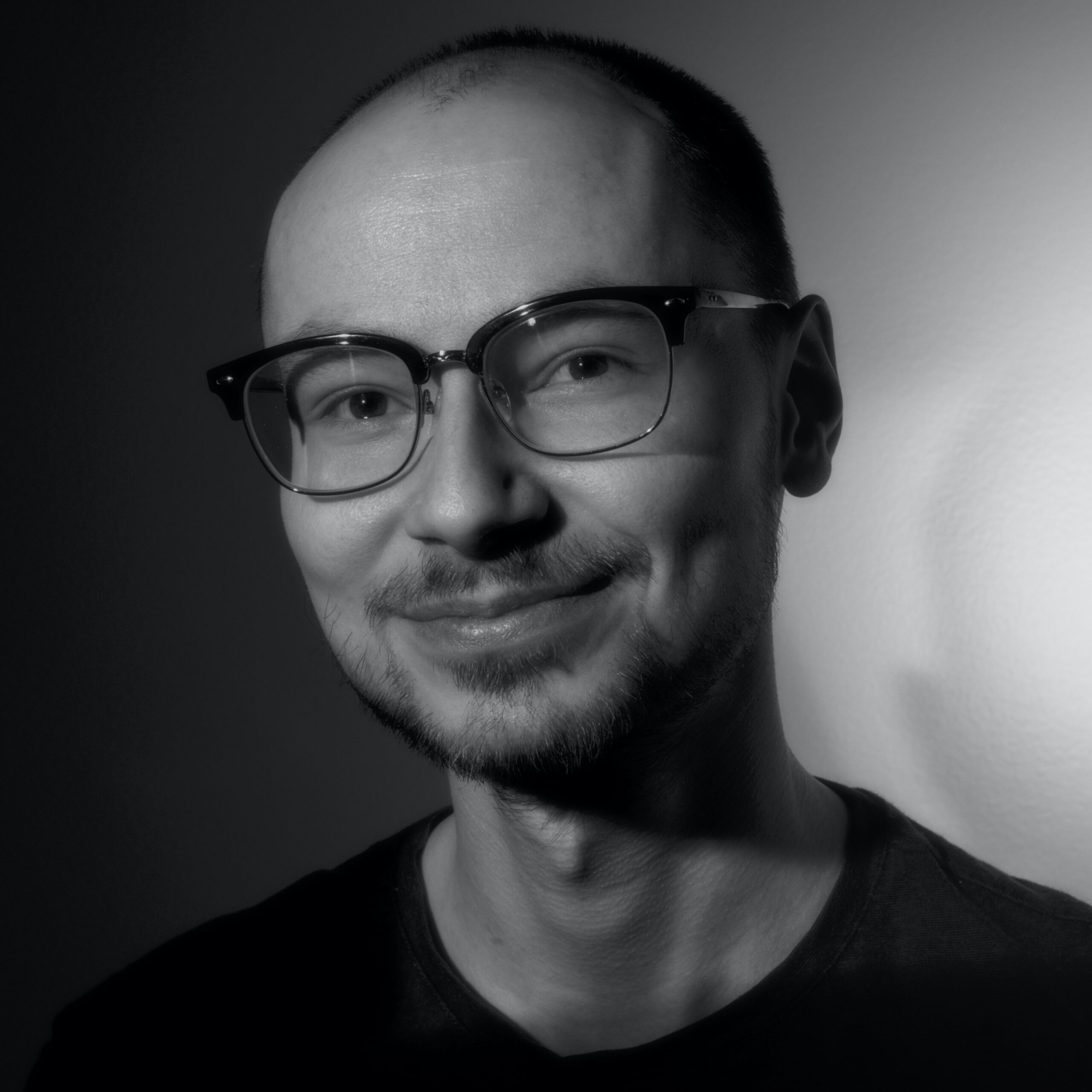
Matt is a Calgary-based lighting designer, currently specialising in Dance lighting. He is ecstatic to be working on such a new and experimental piece, pushing the boundaries with this amazingly creative team!

Matt has an intense passion for light and is often found studying the quality of light hitting objects (and friends). He loves using light and colour to convey and enhance the elements within a story. In his spare time, he experiments with film photography and photo development in his makeshift darkroom. Notable dance productions include; Mainstage (UCalgary SCPA), WM2: Upside Down (W&M Physical Theatre), and Single Drop (Error 404 Dance Found)

Claire Morton

Claire Morton is a Winnipeg-born dancer who trained extensively in a wide range of genres, developing a strong and versatile foundation. Now based in Calgary, Morton is currently completing a Bachelor of Arts in Dance and a Bachelor of Education concurrently at the University of Calgary. In Winnipeg, Morton has been featured in Skylines Dance & Film Festival, along with other performances. In Calgary, she has had the opportunity to perform in Mainstage, Transform, Dance@Noon and Dance@Night through the university, as well as serve as an apprentice with W&M2 Physical Theatre. Morton’s experiences across both cities continue to inform her growth as a dancer and emerging artist.
Maria Mercedes Estrada-Caro

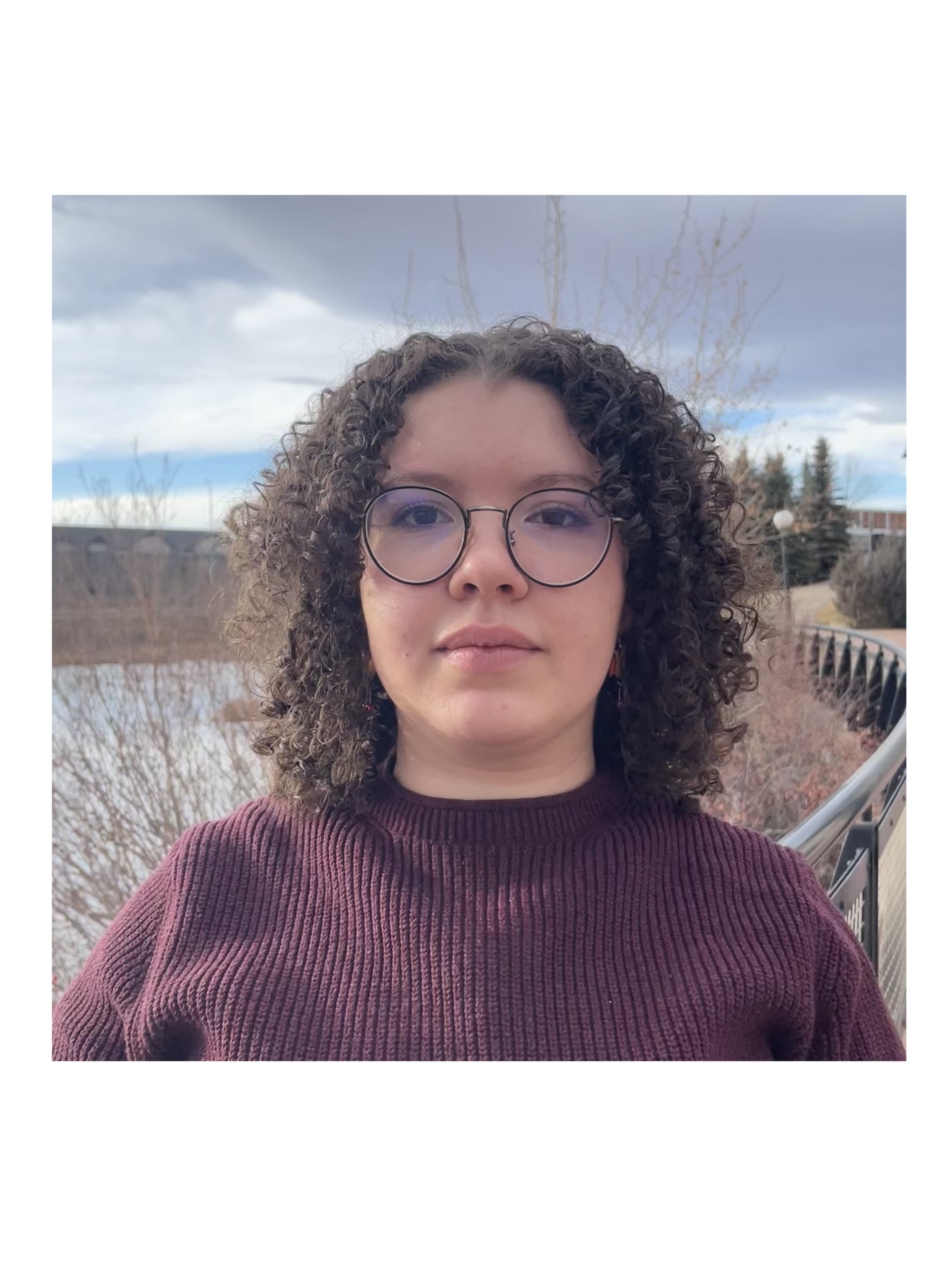
Maria is a performer from Calgary, Alberta. They are currently completing a BA dance and psychology at the University of Calgary along with a BA in linguistics. Maria’s dance practice has been informed by traditional Colombian dance, as well as the instruction they have received at the University of Calgary. Their primary area of interest in both research and performance is in human communication, and they strive to create work that furthers current understanding of human communication.

Abby Fernandes

Abigail, from Vancouver, graduated from Tricity Dance Centre in their Industry Program and from Langley Fine Arts School as a dance major. Throughout her training she grew her skills as a choreographer, performer and technician and attended summer intensives such as Peri Dance Centre in New York City and Harbour Dance Centre in Vancouver. Recently, she performed with BalletBodies YYC in their In Motion IV showcase, completed a season as an apprentice with W&M2 as well as worked with eminent choreographers in TransFoRM and Mainstage at the University of Calgary, where she is approaching her third year as a dance BFA. She is working towards a career in professional dance.
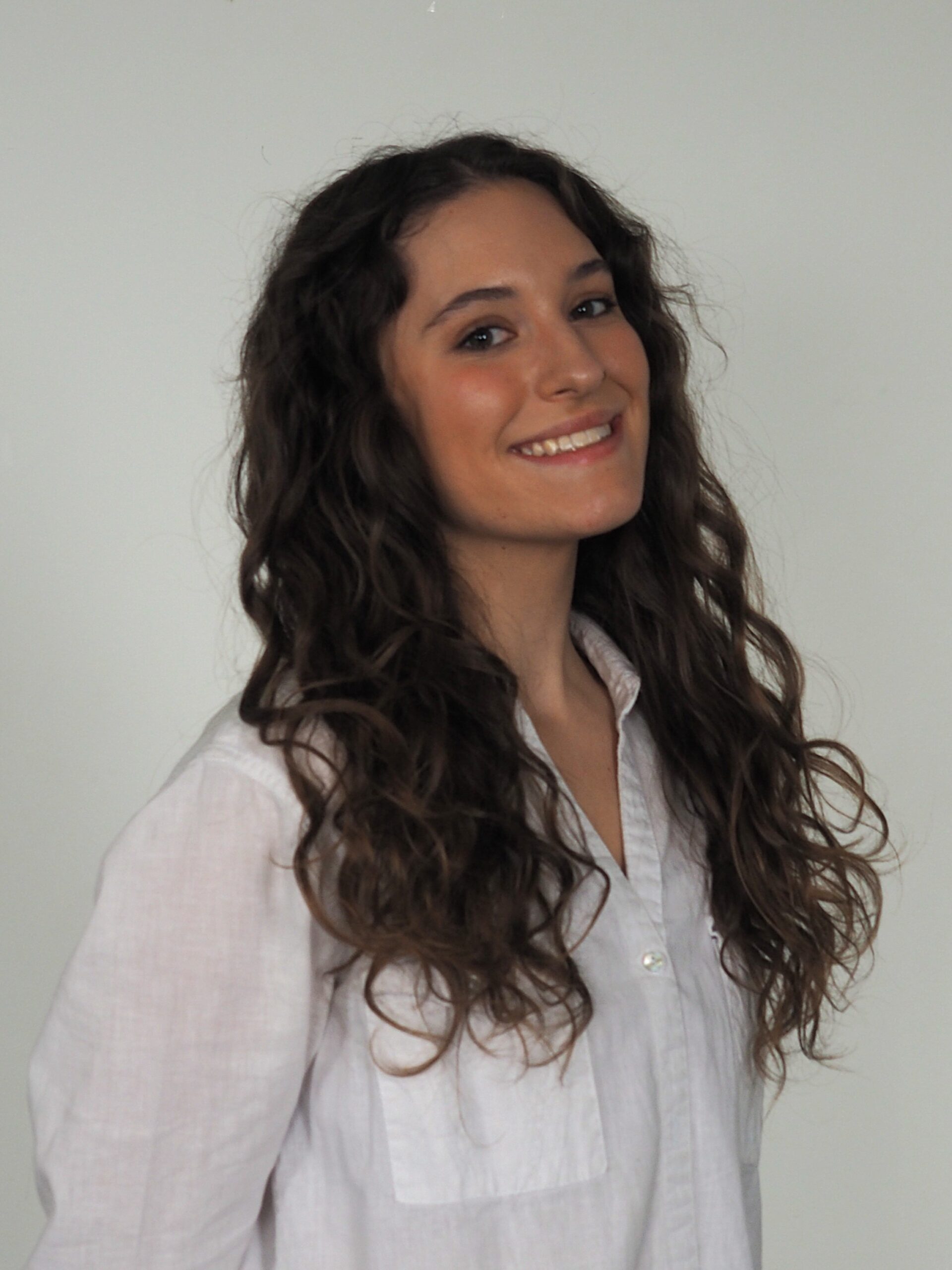
Christine Lucko

Christine Lucko (she/her) is an emerging contemporary dance artist based in Calgary, Alberta. Lucko is currently pursuing a Bachelor of Fine Arts in Dance from the University of Calgary. She was born and raised in Manitoba where she fell in love with dance and began her training. The opportunity to apprentice in lighting and audio production has been very inspiring as Lucko continues to define her artistic focusses. She draws inspiration in her choreography and performance from her connections with others and the environments around her.